
Professional Exfoliation + Peach Fuzz Removal
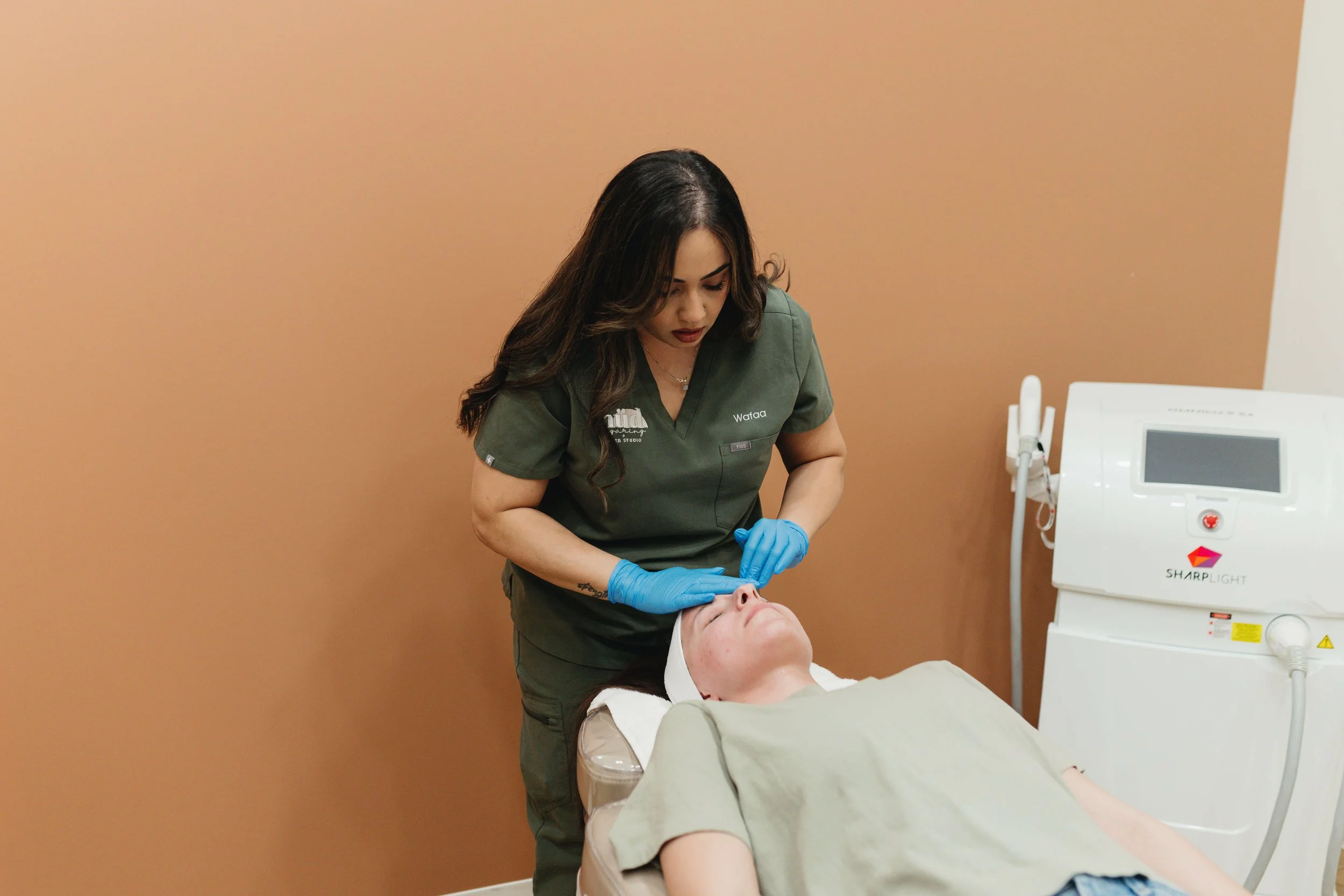
Dermaplaning is a professional exfoliation treatment that removes built-up dead skin cells and fine vellus hair, commonly known as peach fuzz. It helps smooth the skin, improve skincare absorption and create a more even surface for makeup, all with little to no downtime.
Scroll through our frequently asked questions below to learn more about how dermaplaning works, who it’s best suited for, what results to expect, and some of the most common questions we hear before treatment.
Why Some Clients Choose Dermaplaning Over Facial Sugaring
Which One is Right for Me? Both sugaring and dermaplaning can remove unwanted facial hair, but they work differently and may suit different skin types and treatment goals.
Sensitive Facial Skin
A Gentler Approach for Some Clients
Although sugaring is a very gentle form of hair removal, some clients find that removing a large amount of fine vellus hair from the root can simply be a bit too much for their facial skin. In some people, this can lead to temporary redness, sensitivity, irritation or a mild histamine-type reaction, especially in more reactive areas like the upper lip, cheeks and jawline.
Dermaplaning removes vellus hair at the surface instead of from the follicle, which some clients find their skin tolerates better. Others tolerate facial sugaring extremely well and prefer it because the hair removal generally lasts longer.
There are pros and cons to each method, and the better option really depends on your skin, how your face reacts to hair removal, and what you want from the treatment.
Congestion-Prone Skin
Another Option for Peach Fuzz Removal
Some clients notice that facial sugaring can leave them more prone to congestion or breakouts, even when the rest of their body responds beautifully to sugaring. This is not the case for everyone, and many clients tolerate facial sugaring very well.
For those who are more congestion-prone, even regular exfoliation once or twice per week may not always prevent bumps or clogged pores from developing after facial hair is removed from the root.
Because dermaplaning removes vellus hair at the surface rather than from the follicle, it can be a better fit for some clients whose facial skin tends to become congested after sugaring.
More Customizable
More Options for Advanced Skin Pairings
Dermaplaning can be paired with treatments such as a customized chemical peel, professional skincare, targeted under-eye treatments, LED light therapy, and some laser treatments such as IPL skin rejuvenation.
Because dermaplaning removes vellus hair at the surface rather than from the root, it can leave more flexibility to combine treatments in the same appointment. Facial sugaring can temporarily leave the skin more sensitized, which means some of these treatment pairings are not appropriate immediately afterward.
Frequently Asked Questions
-
Dermaplaning is a professional exfoliation treatment that uses a sterile surgical blade to gently remove built-up dead skin cells and fine vellus hair, commonly known as peach fuzz, from the surface of the skin.
-
Dermaplaning should not be painful. Most clients describe the treatment as comfortable and may only feel a light scraping sensation as the blade moves across the skin.
-
No. Dermaplaning does not change the hair follicle, so it cannot make vellus hair grow back thicker, darker or more coarse.
Because the hair is removed at the surface, you may notice it as it begins to grow back, but the hair itself has not changed.
If you ever notice a genuine change in the amount, colour or coarseness of your facial hair, this would not be caused by dermaplaning. Hormonal changes, medications and some medical conditions can affect facial hair growth, so we may recommend speaking with your healthcare provider if you notice a significant change.
-
Most clients enjoy noticeably smoother skin for several weeks. The exact timeline varies depending on your natural skin turnover and how quickly your vellus hair grows back.
Dermaplaning can generally be repeated every 4 to 6 weeks, although some clients choose monthly treatments to consistently maintain smooth, peach fuzz-free skin.
-
For regular maintenance, we typically recommend dermaplaning every 4 to 6 weeks.
Some clients book monthly because they love the way their skin and makeup look after treatment, while others choose dermaplaning occasionally before events or whenever they feel their skin needs more exfoliation.
-
Not quite. Both remove hair at the surface, but professional dermaplaning is primarily an exfoliation treatment.
Dermaplaning uses a professional sterile blade and controlled technique to remove both fine vellus hair and accumulated dead skin cells. It also removes the hair closer to the surface of the skin than typical at-home facial shaving, which can contribute to that especially smooth finish after treatment.
At-home facial shaving is generally focused on hair removal and does not provide the same level of professional exfoliation or precision.
We also do not recommend at-home dermaplaning razors as a substitute for professional dermaplaning. Without proper technique, blade angle, skin preparation and sanitation, it is easier to cause irritation, small cuts, superficial abrasions or over-exfoliation. Reusing at-home tools without proper cleaning can also allow bacteria to build up on the blade, which may increase the risk of irritation, breakouts or infection.
Professional dermaplaning is performed using a sterile, single-use blade and proper skin preparation to help minimize these risks.
-
Neither is universally better. They simply work differently.
Sugaring removes facial hair from the root, so the hair-removal results generally last longer. Dermaplaning removes vellus hair at the surface while also providing professional exfoliation.
Some clients find their facial skin tolerates dermaplaning better, particularly if removing large amounts of fine vellus hair from the root tends to cause irritation, a mild histamine reaction or congestion. Others tolerate facial sugaring beautifully and prefer the longer-lasting hair removal.
There are pros and cons to each method, and our team can help you determine which option makes the most sense for your skin and goals.
-
Dermaplaning does not automatically cause breakouts, but any exfoliating treatment can occasionally be followed by temporary congestion or irritation, especially if the skin is already inflamed or compromised.
This is one of the reasons we do not perform dermaplaning over active, inflamed breakouts, pustules or “angry” acne. Working over inflamed acne can further irritate the skin and may increase the chance of spreading bacteria across the treatment area.
If you have mild congestion or non-inflamed blackheads, dermaplaning may still be appropriate and a few light extractions can be performed when needed.
Following proper aftercare and avoiding irritating or inappropriate products immediately afterward can also help reduce the chance of post-treatment irritation or congestion.
-
Yes. Dermaplaning can be suitable for sensitive and rosacea-prone skin as long as the skin is not in an active flare.
We can treat clients who are rosacea-prone, but we would avoid dermaplaning over areas with active pustules, broken skin, or significant inflammation.
For some clients with sensitive skin, dermaplaning may also be better tolerated than facial sugaring because the fine vellus hair is removed at the surface rather than from the root.
-
Yes. Dermaplaning itself is a mechanical exfoliation treatment and can be performed during pregnancy and while breastfeeding.
We can also customize the products used during your treatment, and we offer a pregnancy and breastfeeding-safe chemical peel option when appropriate.
-
Yes. Dermaplaning can be customized and paired with a variety of other professional skin treatments depending on your skin, concerns and goals.
One of the most popular combinations is dermaplaning with a customized chemical peel. Removing dead skin and surface buildup first can help the peel apply more evenly and allows us to create a more advanced exfoliation treatment for concerns such as pigmentation, congestion, dullness, uneven texture and superficial fine lines.
Dermaplaning can also be paired with treatments such as a Hydrojelly mask, Colorescience under-eye treatment, Celluma LED light therapy, and certain laser treatments such as IPL skin rejuvenation when appropriate.
-
A few light extractions can be included when needed.
If you have a significant amount of congestion or multiple areas requiring extractions, additional extraction time must be booked as an add-on so we have enough time to address the skin properly without shortening the rest of your dermaplaning treatment.
If you’d like to use a topical numbing cream, we recommend checking with your doctor first, since small amounts of anesthetic can pass into breast milk.
For comfort and safety, we do not treat the breast area while you’re nursing, since the skin is more sensitive and in frequent contact with your baby.
-
At Nüd, we offer dermaplaning on the face only.
Treatment can include areas such as the forehead, cheeks, jawline, chin and upper lip, while avoiding active inflammation, open lesions, pustules and coarse terminal hair such as beard growth.
-
Dermaplaning is designed primarily for fine vellus hair, not coarse terminal hair.
Coarse facial hairs are better addressed with another hair-removal method, such as sugaring, laser hair removal or electrolysis, depending on the hair and your goals.
-
Most clients experience little to no downtime.
Mild temporary redness or sensitivity can occur, particularly in more reactive skin, but most clients are able to return to their regular activities following treatment.
-
Yes. Dermaplaning is popular before events because it creates an exceptionally smooth surface for makeup application.
If it is your first time receiving dermaplaning, I would recommend booking at least a week before an important event rather than trying a new treatment immediately beforehand. Once you know how your skin responds, your esthetician can help you plan future appointments closer to special occasions.
-
Yes. Certain skincare products, hair-removal methods, sun exposure and professional treatments should be avoided before dermaplaning.
For the full pre-care checklist, head to to the bottom of our Dermaplaning Service Page.
-
Our Professional Dermaplaning Treatment is $130 and takes approximately 60 minutes.
It can also be customized with add-ons such as additional extraction time, a Hydrojelly mask, customized chemical peel, Colorescience Total Eye Treatment or Celluma LED light therapy.
For full pricing and treatment details, visit our Dermaplaning Service Page.
-
Clients aged 12–17 are welcome to receive dermaplaning with parental or guardian consent, and a guardian must be present at the first appointment.
-
Yes! We understand that childcare isn’t always available, and we do our best to support our clients when their minis need to come along.
For laser and light-based treatments, sadly we cannot have children or additional guests in the room, as we do not have protective eyewear for them and it would not be safe.
However, if your child is old enough to wait unattended in our cozy waiting room, they are more than welcome to accompany you to your appointment.
For treatments that don’t involve laser or light-based devices, children are welcome to sit in the treatment room with you.
We love seeing your littles and are here to support you as best as we can, so you can attend your appointments even when childcare isn’t an option!
Have any other questions about professional dermaplaning?